The loan offered at the dealership and the personal loan offered by your bank can both pay for the same car. But they give the lenders different rights if you stop paying. With a typical auto loan, the vehicle is collateral. With an unsecured personal loan, it isn’t.
That difference can affect your rate, which cars you can finance, the insurance you must carry and what happens after a default. It doesn’t, however, tell you which offer is cheaper. For that, you need actual loan terms.
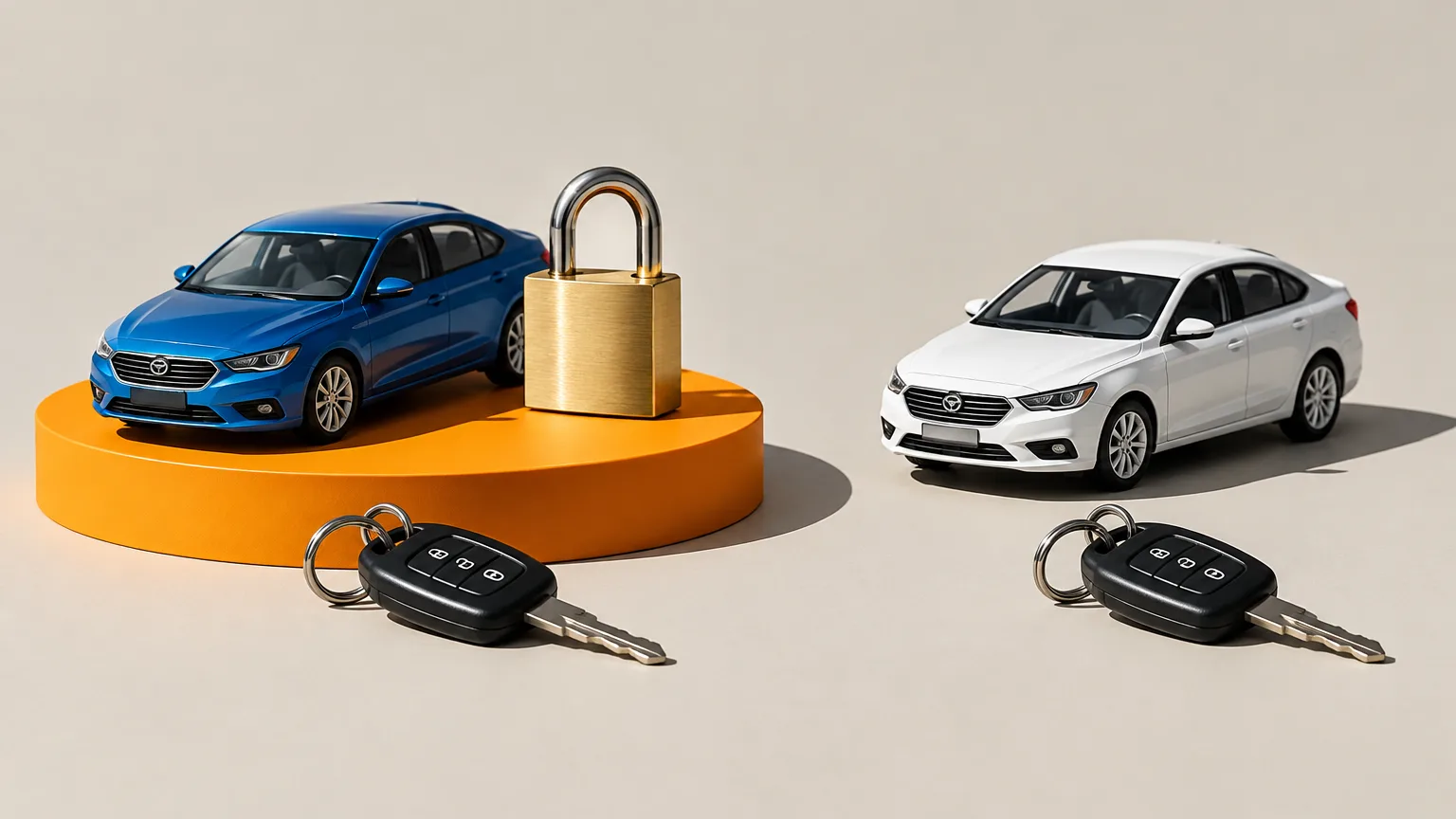
The difference is the lender’s claim on the car
Most auto loans are secured: you borrow to buy a vehicle, and the lender has a lien on it until the debt is paid. You can drive the car, but the lien gives the lender a claim against it if you default. A loan arranged through a dealership is not necessarily a different kind of debt from one obtained at a bank or credit union; either can be secured by the vehicle.
To buy a car without using it as collateral, you would generally look for an unsecured personal loan whose terms permit the purchase. The lender approves you based on your ability and promise to repay, rather than taking a lien on the car. The FDIC’s guide to loans explains that auto loans are usually secured, while unsecured loans have no pledged collateral.
Question | Secured auto loan | Unsecured personal loan used to buy a car |
|---|---|---|
Is the purchased car collateral? | Yes, typically through a lien | No, provided the loan is genuinely unsecured |
Does the lender assess the vehicle? | Yes; its value and eligibility can affect the offer | Not as collateral, though the lender must allow the intended use |
What happens if you default? | The lender may repossess the car, subject to the contract and state law | The lender cannot repossess it under a vehicle lien it doesn’t have, but can pursue the unpaid debt |
Is the rate necessarily lower? | No; collateral can help, but the actual offer decides | No; good credit or a better lender offer may change the comparison |
Check the agreement, not just the product name. A loan marketed for car buyers is not automatically unsecured, and using your existing vehicle to secure a loan is not the same arrangement as taking out an unsecured personal loan.
How collateral changes rates and approval
A vehicle gives an auto lender a way to recover some money if the borrower defaults. An unsecured lender lacks that direct claim, so it may charge a higher rate or be more selective. But “secured is cheaper” is a useful starting expectation, not a pricing rule. Credit history, income, existing debt, loan term, lender and vehicle all matter.
Collateral may make financing more accessible if your credit is limited, but it cannot make an unaffordable payment affordable. A borrower with weak credit might still receive a costly secured offer. Conversely, someone with strong credit might qualify for an unsecured loan worth comparing. Ask for both quotes before deciding that avoiding a lien is worth the price difference.
Secured loans also have vehicle rules. For example, Bank of America’s auto-loan eligibility terms exclude vehicles older than 10 calendar years, those with 125,000 miles or more, and vehicles with salvaged or branded titles. It also sets a minimum financed amount. Those are that lender’s rules, not industry-wide limits, but they show why a conventional auto loan may not fit every used-car purchase.
An unsecured loan can offer a practical alternative for a car a particular auto lender won’t finance—if the personal lender permits car purchases and approves enough money. That flexibility is most valuable when it solves a real eligibility problem, not when it merely saves a step in arranging financing.
Compare the full cost, not the loan label
Start with the annual percentage rate, or APR, on each offer. It incorporates interest and certain lender fees, making it more useful for comparison than the interest rate alone. Then compare the amount financed, repayment term, monthly payment and total of payments. The Consumer Financial Protection Bureau’s auto-loan terms guide distinguishes APR from the interest rate and explains why a longer term can raise total borrowing costs even as it lowers the monthly bill.
Consider two hypothetical, fixed-rate loans of $20,000, each repaid over 48 months with no fees: one at 7% interest and one at 12%. The 7% loan would cost about $479 a month and $2,988 in interest. The 12% loan would cost about $527 a month and $5,280 in interest. That’s roughly $2,292 more to borrow the same amount. These are illustrations, not advertised rates; real APRs, fees and terms will determine your cost.
Keep the comparison fair. If one offer runs for 60 months and the other for 48, its lower payment does not prove it is cheaper. Likewise, an origination fee on a personal loan can reduce the cash you receive or raise what you owe. Confirm that either loan actually provides enough money for the purchase, including any taxes and registration costs you plan to finance.
A secured loan can bring costs beyond the payment. Auto finance contracts generally require coverage for physical damage to the vehicle, such as comprehensive and collision insurance. If required coverage lapses, a lender may buy coverage that protects its interest and charge you for it; CFPB guidance on insurance for financed vehicles notes that lender-placed coverage does not protect you in the same way as your own policy. An unsecured lender has no vehicle collateral to protect, but you still need insurance required by your state and should weigh the risk of losing a car while still owing the personal loan.
Don’t confuse physical-damage coverage with GAP insurance. GAP is an optional product that may cover some or all of the difference between an auto-loan balance and an insurance payout if a vehicle is stolen or totaled; it is not a substitute for car insurance. Check its price and exclusions before adding it to a loan.
What happens if you stop paying?
With a secured auto loan, the immediate risk is losing the vehicle. In many states, a lender can repossess after a default without first going to court or giving advance notice. Your contract defines what can put you in default, while state law affects the repossession process. A lender cannot breach the peace when taking the car.
Repossession does not necessarily settle the debt. If the lender sells the vehicle for less than what you owe plus applicable expenses, the remainder is a deficiency balance. In most states, the lender can sue to collect it if it followed the applicable repossession and sale rules. The Federal Trade Commission’s repossession guidance also explains that returning a car voluntarily can reduce some fees without necessarily wiping out the deficiency. If you are struggling, contact the lender early about possible payment arrangements and get any change in writing.
An unsecured lender has no agreed-upon right to take your car simply because it was bought with the loan proceeds. That is a meaningful protection, especially if you rely on the vehicle to work. It is not protection from the debt itself: missed payments can damage your credit, and the lender may use collections or sue. Depending on the judgment and state law, a successful creditor may be able to reach wages, bank funds or property. The CFPB’s discussion of civil debt judgments makes clear why “no repossession lien” should not be read as “no risk to your assets.”
Both structures leave you owing the loan if the car breaks down or loses value. If it is stolen or totaled, the obligation also remains unless insurance or another applicable protection pays it off. Choose a payment that leaves room for repairs and insurance, not merely one a lender will approve.
Which structure fits your purchase?
A secured auto loan is usually the first quote to seek for an eligible new or used car. The vehicle may help you qualify and may improve the rate, while shopping directly with a bank or credit union gives you an offer to compare against dealership-arranged financing. The CFPB recommends getting outside auto-loan quotes before relying on the dealer’s offer.
An unsecured personal loan deserves a look when the vehicle does not meet a secured lender’s rules, or when keeping it free of a loan lien matters enough to justify the terms you are offered. First, confirm that the lender permits the purchase, that the proceeds will be available when the seller needs payment and that the loan amount covers what you need. If the APR is substantially higher, put a dollar figure on the extra cost of that flexibility.
Before signing either agreement, ask:
What are the APR, fees, term, payment and total of payments?
Is the car collateral, and will the lender place a lien on it?
Are there vehicle restrictions, a required down payment or insurance requirements?
Can you pay early without a penalty, and how are extra payments applied?
If you miss a payment, when does the contract treat the loan as in default?
Finally, don’t mistake a high-cost vehicle title loan for an ordinary secured purchase loan. Title loans commonly use a car you already own as collateral to obtain cash. The CFPB distinguishes these loans from routine car-purchase financing and documents serious costs and repossession risks for the single-payment products it studied.
The sensible choice is the offer you can repay comfortably at an acceptable total cost—with a clear understanding of what the lender can do if you cannot. Compare real quotes first; the label “secured” or “unsecured” is only the beginning of that decision.
Disclaimer
This article provides general financial information, not personalized advice. Loan terms and repossession rights depend on your agreement and applicable state law.